
In the remote part of West Nile lies Obongi one of the refugee hosting districts. The district is associated with multiple challenges ranging from health, sanitation, poor infrastructure and poor education among others. Idiwa Parents’ Secondary School is among the few secondary schools found in Obongi district. Just like the district itself, the school was battling quite a number of challenges such as overcrowding, poor infrastructure, language barriers, curriculum integration, psychosocial challenges, limited funding and resources, security risks and most of all, teacher shortages and capacity. Teacher shortage also contributed to low morale among the few teachers, there was underpayment, and limited professional development opportunities. But the biggest challenge wasn’t physical it was emotional. The teachers were tired. Their passion had died out.
Mr. Mwijje Dalton, all the way from Bushenyi found himself in this remote part of the country having got an opportunity to be employed by Finn Church Aid, an international NGO supporting refugee education in most of the refugee settlements in Uganda. Dalton was posted as a teacher in Palorinya refugee settlement where this particular school is located.
At first he felt the whole world was crashing on his head not knowing how to adapt to this new environment let alone overcome the numerous challenges that were facing the school, especially the low morale among the teachers. He wondered how he would be an exception.
However in 2024 term one, the headteacher who happens to be the district Association of Secondary School Headteachers of Uganda (ASSHU) Chairperson got an invitation letter from the Regional ASSHU chairperson to attend a two days’ Teacher Changemaker Development Programme in Arua City organised by STiR Education but the headteacher decided to delegate Dalton to represent him. This was a great opportunity for him because the programme emphasised teacher leadership, innovation and, most importantly the Learning Improvement Circle of creating a safe learning environment through building positive relationships made him to start seeing things differently and it also gave him the determination to bring about motivation among the staff especially to those at his school.
But for Dalton, the challenge was with the school where he was teaching, he wondered how he would roll out the network meetings and classroom observations given the low morale and disengagement of the teachers. He had to think of a strategy on how to do this. But his headteacher was supportive and he welcomed the activity.
He conducted the first network meeting under a tree such that the teachers could feel relaxed. During this meeting, he began by sharing success stories from other teachers who had embraced the TCMDP. The story was to inspire them.
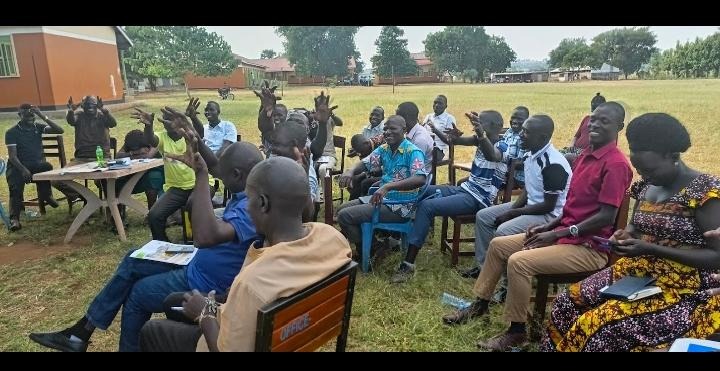
A network meeting at Idiwa Parents’ secondary school
To his surprise, the teachers were so excited about this new innovation and they embraced it too. He then introduced Teacher Reflection Circles every Friday after classes. These were safe spaces where teachers shared classroom experiences, discussed strategies, and encouraged one another.
“You don’t need a fancy projector to innovate,” Dalton said. “You just need each other.” In the school, collaboration replaced competition. Confidence replaced doubt. He also encouraged teachers to involve students in decision-making. They established a Student-Teacher Committee, which met monthly to suggest improvements.
By the end of the year, there was a positive relationship built among the teachers and students, teacher absenteeism reduced, classrooms became lively and the once disengaged teachers started loving their work. Most importantly, the teachers started smiling again, not because of what they earned, but because of what they gave.
Dalton did not only stop at giving support to the teachers of Idiwa Parents’ Secondary school, but rather he extended his support to all the other schools through coaching the headteachers and once in a while physically attending network meetings in some of the schools where he provided guidance and support on data entry.
Obongi district became one of the most performing districts in West Nile in terms of data entry. During term one 2025 Regional institute, Dalton and his colleague DEL Baako Betty were invited to share Obongi’s success such that other districts can learn from it. He didn’t speak of technology or funding.
He said: “We didn’t wait for change from Kampala. We became the change.”
The Teacher Changemaker Development Programme didn’t just train Dalton, it empowered him to ignite others. And in a forgotten corner of Uganda, a school rediscovered its soul.
Moral of the Story: In the face of systemic hardship, the greatest fuel for change is purpose.
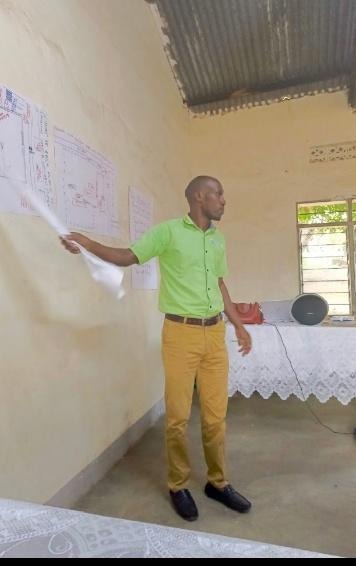
Supporting a network meeting at Obongi Secondary school